Ceramic Hip Resurfacing
What is Ceramic Hip Resurfacing?
Ceramic hip resurfacing is a specialised form of hip surgery designed to treat hip joint damage while preserving as much of the patient’s natural bone as possible. Unlike a total hip replacement, where the entire femoral head (the ball of the hip joint) is removed and replaced with a stemmed implant, hip resurfacing reshapes and caps the existing femoral head with a smooth, hard ceramic surface. The socket of the hip (the acetabulum) is also fitted with a ceramic lining, allowing the joint to move smoothly.
The key principle behind ceramic hip resurfacing, similar to metal-on-metal hip resurfacing, is bone preservation. By retaining most of the patient’s own femoral head and neck, the procedure maintains more natural hip anatomy and biomechanics. This can be particularly beneficial for younger, more active patients who want to get back to regular running and contact sports. For most patients over 55, a total hip replacement is a more appropriate treatment for their osteoarthritis, with a slightly quicker recovery or lower risk.
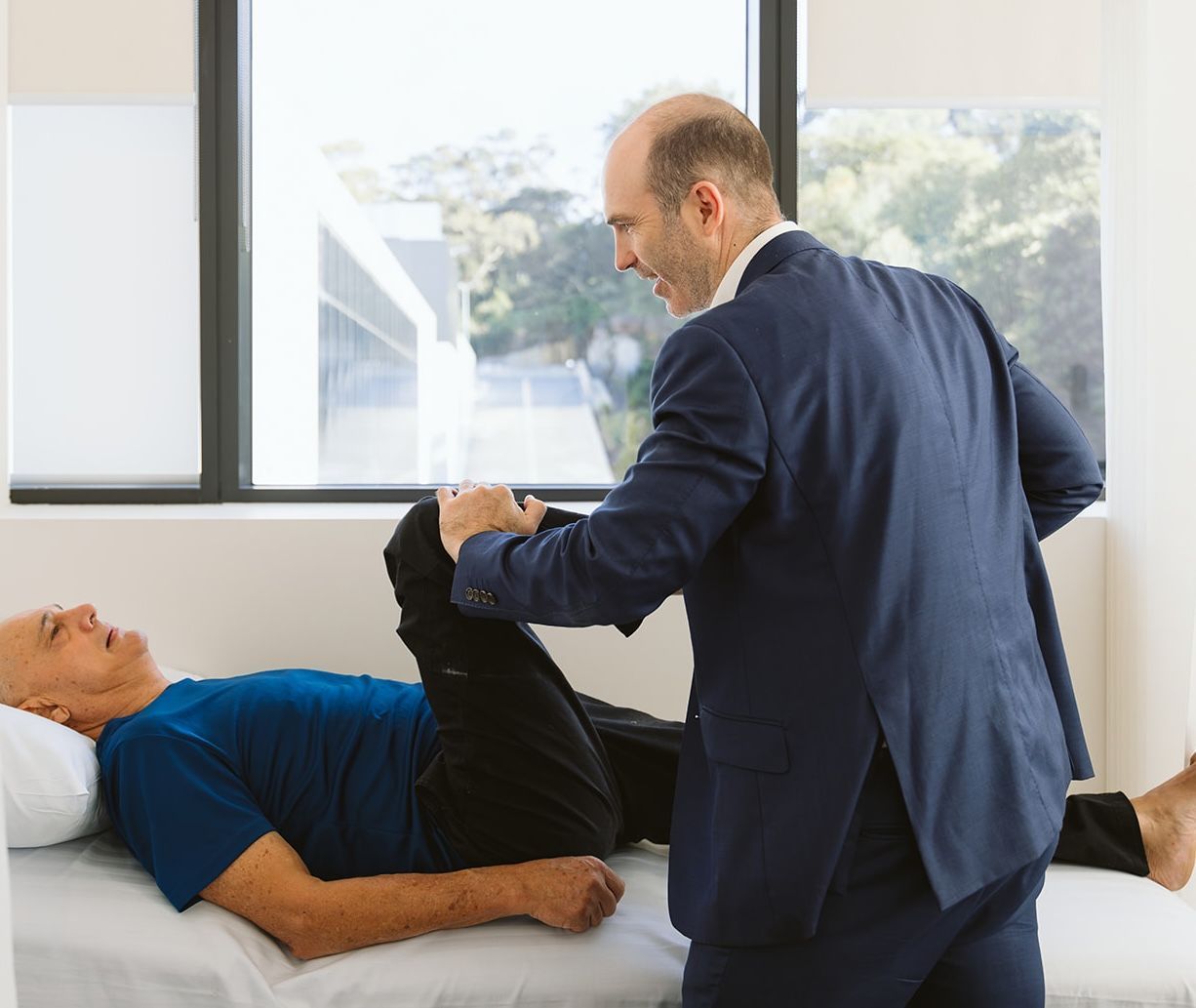
The use of ceramic materials is a recent evolution in hip resurfacing. While earlier resurfacing devices, such as the Birmingham Hip Resurfacing or Adept Resurfacing, had high rates of clinical success, their bearing surface was metal-on-metal, which raised concerns about metal wear debris and elevated metal ion levels in the bloodstream. Ceramic materials are extremely hard, highly polished, and biocompatible, producing very low wear rates. This makes ceramic hip resurfacing an attractive option for selected patients seeking durability with fewer long-term material-related risks.
Dr Williams currently uses the ReCerf hip resurfacing device from MatOrtho. This device is relatively new to the market and has only been approved for widespread use in Australia for 2 years. Prior to this, it was in a clinical trial phase for 7 years, with very low revision rates, no higher than those of the previous Adept metal-on-metal implant, on which it was modelled. To date, over 3,000 ReCerf implants have been placed worldwide, with good clinical results. Dr Williams believes it is very important to maintain a cautious approach to the adoption of new implants and will be closely monitoring his own results using the ReCerf, as well as those in the Australian Joint Replacement Registry.
Who is Suitable for Ceramic Hip Resurfacing?
- Younger, active adults: This procedure is most commonly considered for patients under 55 who lead physically active lifestyles and wish to return to sports that involve running or other demanding activities.
- Good bone quality: Strong, healthy bone in the femoral head and neck is essential. Patients with osteoporosis or significant bone weakness are generally not suitable due to the risk of femoral neck fracture.
- Hip arthritis with preserved anatomy: People with osteoarthritis, post-traumatic arthritis, or certain inflammatory conditions may be suitable if the shape of the femoral head is still largely intact.
- Larger-framed patients: For metal-on-metal resurfacing, outcomes tended to be better in patients with larger bone structures, and use was limited to patients with at least a 48mm diameter femoral head. However, due to the excellent wear properties of ceramic, it is thought that smaller implants are likely to do just as well, which may expand the indications to smaller males and more female patients.
- No significant femoral head deformity: Severe deformities, large cysts, or femoral head collapse may render resurfacing unsafe.
- Low risk of fracture: Patients must not have conditions that increase the risk of femoral neck fracture after surgery, such as osteoporosis.
Ceramic hip resurfacing is not recommended for older patients, individuals with low bone density, those with advanced hip deformity, or those with certain metabolic bone disorders. Women of smaller build may also be less suitable, depending on bone size and quality, although each case must be assessed individually.
Benefits of Ceramic Hip Resurfacing
Ceramic hip resurfacing offers several potential advantages over total hip replacement in carefully selected patients.
- Bone preservation: The femoral head and neck are retained, which helps preserve natural anatomy and may make future femoral-sided revision surgery easier, if required.
- More natural hip loading: Because the original bone structure is maintained, the load transfer through the top of the femur may be more ‘normal’, and result in a more natural gait compared to THR, according to some studies.
- Simpler revision options: If revision surgery is needed later in life, conversion to a total hip replacement is often more straightforward because bone stock is preserved on the femoral side.
- Potential for high activity levels: Many suitable patients return to running, surfing, and other high-impact sports after rehabilitation. Lower-impact sports like golf and cycling are perfectly fine after a standard total hip replacement.
- Lower wear rates: Ceramic surfaces are extremely smooth and wear-resistant, reducing the risk of debris-related inflammation and implant loosening.
- Reduced risk of metal-related issues: Ceramic materials avoid the metal ion concerns associated with metal-on-metal resurfacing systems.
- Improved stability: The larger femoral head size used in resurfacing leads to a very low risk of dislocation. It should be noted that the risk of dislocation with anterior approach hip replacement, which is Dr Williams’ preferred technique, is also extremely low.
While these benefits can be significant, they are closely linked to correct patient selection and surgical expertise.
What is a ceramic hip resurfacing made of?
The ReCerf ceramic hip resurfacing consists of two components.
The femoral head is made of the latest-generation BIOLOX delta ceramic (produced by the French company CeramTec). After the top of the femur is prepared, the ceramic cap is fixed in place with a polymer bone cement (polymethyl methacrylate, PMMA), which cures in about 10 minutes.
The acetabular component (the cup that goes into the socket) is also made of the same smooth ceramic. Its outer surface is coated with a thin layer of porous titanium covered by an artificial bone substance called hydroxyapatite, which promotes bone growth directly onto the implant. The acetabular component is press-fit into the bone for fixation after the cavity has been carefully prepared.
Alternative Options to Ceramic Hip Resurfacing
Some patients will not be suitable candidates for ceramic hip resurfacing, and for these patients, there are excellent alternatives available.
- Total Hip Replacement: This remains the most common and reliable surgical option for advanced hip arthritis. Dr Williams typically performs total hip replacement through a minimally invasive direct anterior approach and uses Modern ceramic-on-polyethylene or ceramic-on-ceramic bearings, which have excellent long-term outcomes.
- Hip Preservation Surgery: In younger patients with early, very mild cartilage changes, procedures such as hip arthroscopy, osteoplasty and labral repair may delay or prevent the need for joint replacement or resurfacing. As Dr Williams is trained in both hip arthroscopy and hip resurfacing, he is well placed to discuss which option may be better for you during your consultation.
- Non-surgical management: Physiotherapy, activity modification, weight management, pain relief strategies, and guided injections may help manage symptoms in early or moderate disease.
Ceramic Hip Resurfacing Procedure
Dr Williams performs ceramic hip resurfacing in a hospital setting under general and spinal anaesthesia. The procedure usually takes between one and two hours, depending on complexity.
- Surgical approach: Dr Williams performs the posterior approach to the hip for hip resurfacing, as he feels it provides the best exposure for accurate positioning of the femoral head component in his hands. You are positioned securely on your side throughout the procedure. Soft tissue releases, including circumferential release of the joint capsule, are required to expose the femoral head.
- Preparation of the femoral head: Instead of removing the entire femoral head, the damaged surface is reshaped and prepared to receive a smooth ceramic cap. Dr Williams uses a 3D-printed guide based on your own anatomy to carefully position the guidewire and prepare the ideal position for the implant. Special reamers are then used to reshape the ball into a cylindrical shape that preserves the femoral neck and most of your own bone.
- Preparation of the socket: The acetabulum is cleaned of damaged cartilage and a thin layer of bone using a hemispherical mechanical ‘reamer’. The ceramic cup is then securely impacted into the socket.
- Stability and movement checks: Using a trial femoral head component, Dr Williams assesses hip range of motion to confirm stability, leg length, and alignment.
- Implant placement: The ceramic femoral cap is then cemented precisely over the reshaped femoral head, and the joint is reduced, thoroughly washed and infiltrated with local anaesthetic.
- Wound closure: Dr Williams meticulously closes the hip joint capsule, the short external rotator tendons and the overlying gluteus maximus to restore normal anatomy. The skin incision is closed in layers with the final layer being a dissolvable suture below the skin and reinforced with surgical glue and sterile dressings. In some cases, a drain may be used temporarily.
After surgery, patients are transferred to recovery and closely monitored as the anaesthetic wears off.
What to Expect After a Ceramic Hip Resurfacing?
Recovery after ceramic hip resurfacing is progressive and structured, aimed at restoring strength, mobility, and confidence while minimising risks
- Hospital stay: Most patients stay in the hospital for two to four days, depending on recovery speed and support at home.
- Early mobilisation: Walking typically begins within 24 hours, with assistance from a physiotherapist. Crutches or a walking frame will be used initially. Dr Williams recommends the use of a single crutch or walking stick for a full 6 weeks to minimise the risk of femoral neck stress fracture.
- Pain management: Pain is managed using a combination of medications, ice therapy, and gentle movement. Pain typically improves steadily over the first few weeks, though the early recovery is a little harder than after a standard total hip replacement.
- Physiotherapy and rehabilitation: A structured rehabilitation program focuses on improving the range of motion, strengthening muscles, and restoring normal walking patterns. Dr Williams will work with your regular physiotherapist to ensure your recovery is optimised.
- Activity restrictions: One of the big risks with hip resurfacing (given the young, active patient population) is the tendency to go ‘too hard, too early’. It is important to remember that it is a major operation and the soft tissues and bones need time to heal. Excessive early activity may increase the risk of femoral neck stress fracture and failure of the implant, requiring conversion to total hip replacement. A walking stick or single crutch should be used for 6 weeks, and high-impact activities should be avoided for the first 3 months. Dr Williams will guide you on when it is safe to return to work, driving, and sports.
- Wound care: The surgical dressing should be left in place until it is checked by your GP around 10 to 14 days after surgery. It is waterproof for showering but not for bathing or swimming.
- Follow-up appointments: Dr Williams will see you at 6 weeks post-op with X-rays to ensure you are progressing and healing as expected.
Ceramic Hip Resurfacing Outcomes
As ceramic-on-ceramic hip resurfacing devices haven’t been in use for very long, the long-term outcomes remain unknown. Given that the geometry of the device is modelled on the very successful metal Adept hip resurfacing, however, it is expected that results will be similar, if not better. The early results, which have been carefully studied for over 5 years, are certainly promising.
The long-term prognosis for hip resurfacing is generally favourable when patients are carefully selected, and the procedure is technically well performed.
- Pain relief: Most patients experience a marked reduction or complete resolution of hip pain.
- Function and mobility: Many patients regain excellent hip function and return to active lifestyles, including moderate-impact sports.
- Durability: Ceramic materials are highly wear-resistant, which may contribute to long implant lifespan, although long-term data is still evolving.
- Bone preservation benefits: Preserved bone stock allows for simpler revision to total hip replacement if needed in the future.
- Patient satisfaction: Appropriately selected patients often report high satisfaction due to stability, movement quality, and confidence in the joint. Satisfaction levels are similar to those for total hip replacement and are excellent.
As always, outcomes depend on patient selection, preparation, surgical technique, rehabilitation, and adherence to post-operative guidance.
Ceramic Hip Resurfacing Risks
As with any surgical procedure, ceramic hip resurfacing entails potential risks, although serious complications are uncommon.
- Femoral neck fracture: This is a rare but specific risk of hip resurfacing (not present with total hip replacement), in which the preserved femoral neck can fracture. It occurs at a rate of 1.5-2%, often within the first 6 months, and is more likely in patients with poor bone quality or excessive early loading. If the fracture is picked up early as a ‘stress fracture’, it may be treated with off-loading or screw fixation; if a complete fracture occurs, revision to a total hip replacement is usually required.
- Intraoperative conversion to total hip replacement: If, during your operation, Dr Williams assesses the femoral head bone quality as insufficient to support a resurfacing device, he will have a total hip replacement available as a backup option. With careful pre-operative planning, the risk of this is low, but it remains a possibility to be aware of.
- Infection: Deep or superficial infection can occur and may require further treatment or surgery.
- Implant loosening or failure: Although uncommon, the fixation of the implants to the bone can weaken over time, leading to pain and the need for revision surgery (often conversion to total hip replacement).
- Nerve or blood vessel injury: Rare but possible due to the proximity of major structures around the hip, especially the sciatic nerve. (1/1000)
- Blood clots: Risk of deep vein thrombosis or pulmonary embolism is managed with early mobilisation and preventive medication.
- Leg length discrepancy: Usually minimal, but small differences may be noticed in some patients. Less common than in total hip replacement due to preserved anatomy.
- Dislocation: Very rare with hip resurfacing due to the large femoral head size used.
- Persistent pain or stiffness: Some patients may experience ongoing symptoms despite successful surgery. This may be due to soft-tissue irritation, such as of the psoas (hip flexor) tendon, which runs directly over the front of the hip.
Dr Williams will take the time to have a detailed discussion with you, balancing these risks against the expected benefits.