Hip Preservation Surgery
What is Hip Preservation Surgery?
Hip preservation surgery is a group of surgical procedures designed to treat hip pain and dysfunction while preserving the natural hip joint. The main goal is to correct structural problems in and around the hip before significant joint damage or arthritis develops. Rather than replacing the hip joint, hip-preservation surgery aims to improve joint function, reduce pain, slow or halt further damage, and help people remain active for longer.
Dr Williams is one of the few orthopaedic surgeons in Sydney with training in both hip replacement and hip preservation techniques, making him well placed to offer patients the right treatment, regardless of their age or condition.
Types of Hip Preservation Surgery
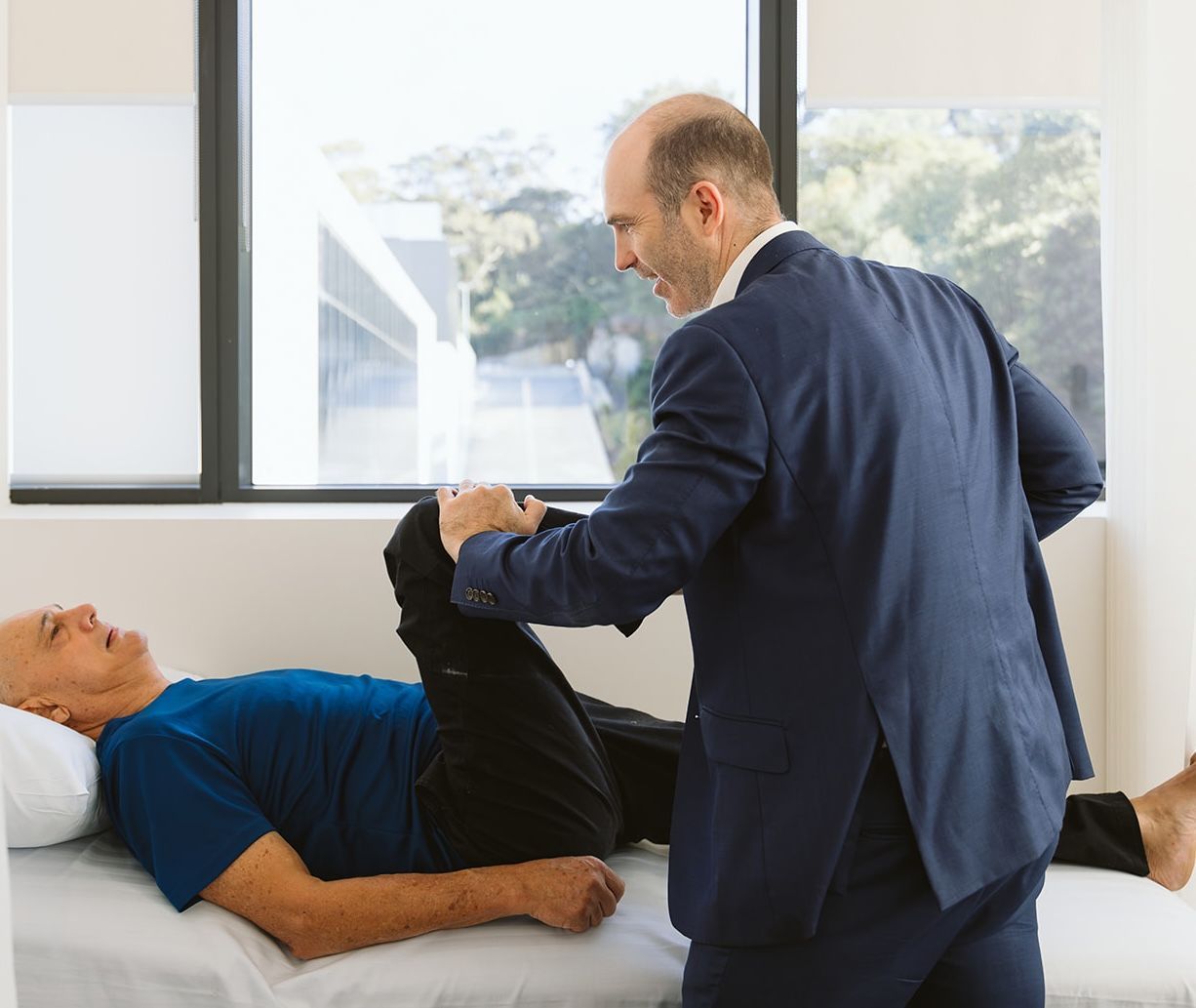
Dr Williams has undergone extensive further training in both keyhole and open hip preservation techniques to provide his patients with the widest array of up-to-date surgical care.
The types of hip preservation surgery that Dr Williams commonly performs include:
- Hip Arthroscopy: A minimally invasive keyhole procedure using a camera and small instruments. It is commonly used to treat femoroacetabular impingement (FAI), repair labral tears, remove damaged cartilage, and address loose bodies. Arthroscopy often allows faster recovery and less pain than open surgery.
- Periacetabular Osteotomy (PAO): A major reconstructive procedure used mainly for hip dysplasia. The hip socket is carefully repositioned to better cover the femoral head, improve joint stability, and hopefully delay the need for hip replacement.
- Labral Repair or Reconstruction: The labrum is a ring of cartilage that deepens the hip socket. Surgery may involve repairing a torn labrum or reconstructing it with graft tissue when repair is not possible.
- Femoral Osteotomy: The thigh bone is cut and realigned to correct abnormal rotation or alignment that affects hip function.
- Surgical hip dislocation: Occasionally, open surgical hip dislocation is required to reconstruct the hip in cases of severe femoroacetabular impingement or after childhood conditions such as slipped capital femoral epiphysis or Perthes disease.
- Cartilage Restoration Procedures: These aim to repair or regenerate damaged cartilage, including microfracture or grafting techniques in selected cases.
The choice of procedure depends on the underlying condition, the extent of damage, and patient-specific factors. Dr Williams will take all these factors into account when recommending the best treatment in your specific case.
Who is Suitable for Hip Preservation Surgery?
Not all individuals with hip pain are suitable candidates for hip preservation surgery. Careful assessment is essential to ensure that the procedure is likely to benefit rather than cause further harm. Suitability depends on age, activity level, hip anatomy, the degree of joint damage, and response to non-surgical treatments.
People who may be suitable include:
- Patients with minimal to early arthritis: Hip preservation is most effective before significant cartilage loss or advanced osteoarthritis develops. Once the cartilage is significantly damaged, hip replacement options become more reliable.
- Younger adults (often under 50–55 years): Especially those who are active and wish to maintain sports, work, or physical lifestyles.
- People with structural hip problems: Such as femoroacetabular impingement, hip dysplasia, abnormal femoral version, or labral tears.
- Patients with ongoing hip pain: Pain that affects daily activities despite physiotherapy, activity modification, and medication.
- Those with preserved joint space on imaging: X-rays and MRI scans showing that the hip joint is still reasonably healthy.
Hip preservation surgery may not be suitable for:
- Advanced hip arthritis: Where joint replacement would provide better pain relief.
- Low-demand or older patients (over 55): Where surgery risks may outweigh benefits, or options such as total hip replacement may provide a more reliable recovery.
A thorough clinical examination and imaging studies are essential to determine whether hip preservation is appropriate.
Benefits of Hip Preservation Surgery
When performed for the right reasons and in suitable patients, hip preservation surgery can offer significant benefits. The key advantage is treating the root cause of hip pain rather than simply managing symptoms.
Potential benefits include:
- Pain relief: By correcting abnormal bone shape, repairing labral tears, or improving joint stability.
- Improved hip movement: Restoring smoother joint motion and reducing stiffness.
- Delay or prevention of arthritis: By reducing ongoing joint damage caused by abnormal mechanics.
- Preservation of the natural hip joint: Avoiding or postponing the need for hip replacement surgery.
- Improved function and quality of life: Making everyday activities, work, and sport more comfortable.
While outcomes are generally positive, success depends on accurate diagnosis, appropriate patient selection, surgical expertise, and adherence to rehabilitation programs.
Alternative Options to Hip Preservation Surgery
Hip preservation surgery is not always the first or only option. Many patients benefit from non-surgical or alternative treatments, especially in the early stages of hip disease.
Alternative options may include:
- Physiotherapy: Targeted strengthening, flexibility, and movement retraining to reduce pain and improve hip mechanics.
- Activity modification: Reducing or avoiding movements that aggravate symptoms, such as deep squatting or high-impact sports.
- Pain relief medications: Anti-inflammatory medications or simple pain relievers for symptom management.
- Injection therapies: Corticosteroid injections to reduce inflammation, or other injections such as platelet-rich plasma in selected cases.
- Weight management: Reducing load on the hip joint to ease symptoms and slow joint degeneration.
- Hip replacement surgery: For patients with advanced arthritis, hip replacement may provide more reliable pain relief and function than preservation procedures.
In some cases, a period of non-surgical management is recommended before considering surgery. For others, early surgical intervention may prevent long-term joint damage.
What to Expect After a Hip Preservation Surgery?
Recovery after hip preservation surgery occurs gradually and requires commitment to rehabilitation. Early recovery focuses on pain control and hip protection, followed by progressive strengthening and functional return.
Immediately after surgery:
- Pain management: Pain is managed with medications, ice, and, in some cases, nerve blocks.
- Mobility support: Crutches or walking aids are often required for several weeks to protect the hip.
- Weight-bearing restrictions: Depending on the procedure, weight-bearing may be limited or modified.
- Physiotherapy: Gentle exercises begin early to maintain mobility and prevent stiffness.
In the weeks to months following surgery:
- Rehabilitation program: A structured physiotherapy program gradually increases strength, flexibility, and control.
- Return to daily activities: Most patients return to desk-based work within a few weeks, while physical jobs take longer.
- Sport and higher-level activity: Return to running or sport may take several months and is guided by recovery progress.
Recovery timelines vary widely depending on the procedure, individual healing, and adherence to rehabilitation. Patience and consistency are key.
Hip Preservation Surgery Prognosis
The prognosis following hip preservation surgery is generally favourable when performed in the right patient, at the right time, and for the right condition. The best outcomes are seen in patients with minimal arthritis and clearly defined mechanical problems.
Expected outcomes include:
- Reduction in pain: Many patients experience significant and lasting pain relief.
- Improved function: Better hip movement and ability to perform daily activities.
- Slowed joint degeneration: Correcting abnormal mechanics may reduce the risk of early arthritis.
- Delay or avoidance of hip replacement: Particularly in younger patients.
Prognosis is influenced by factors such as age, degree of cartilage damage, surgical technique, quality of rehabilitation, and lifestyle. While surgery can improve symptoms and function, it does not guarantee that arthritis will never develop.
Hip Preservation Surgery Risks
Possible risks include:
- Infection: Rare but serious, sometimes requiring additional treatment.
- Bleeding or blood clots: Measures are taken to reduce these risks.
- Nerve or blood vessel injury: Uncommon but possible due to the complex anatomy of the hip.
- Persistent pain or stiffness: Symptoms may not fully resolve in some patients.
- Failure to improve function: Particularly if arthritis is more advanced than expected.
- Progression to hip arthritis: Some patients may still require future hip replacement.
- Reoperation: In rare cases, further surgery may be necessary.
Careful patient selection, experienced surgical technique, and appropriate rehabilitation reduce the likelihood of complications.
What if Hip Preservation Surgery is Delayed?
Delaying hip preservation surgery can have different consequences depending on the underlying condition and severity of symptoms. In some cases, conservative management may be appropriate, whereas in others, delaying intervention may worsen joint damage.
Potential consequences of delay include:
- Progressive cartilage damage: Ongoing abnormal joint mechanics can accelerate wear.
- Development of osteoarthritis: Making joint preservation less effective or no longer possible.
- Increased pain and activity limitation: Affecting quality of life and physical fitness.
- Earlier need for hip replacement: Particularly in younger patients with untreated structural issues.
In contrast, short-term delay may be reasonable when symptoms are mild or responding well to non-surgical treatments. Regular follow-up and repeat imaging help guide the timing of surgery.