Childhood Hip Conditions
What are Childhood Hip Conditions?
There are several well-known conditions that affect the hip joint in babies, children, and adolescents.
In children, the hip joint is still developing. The bones are softer, the growth plates are open, and the surrounding muscles and ligaments are more flexible than in adults. Because of this, the hip can be more vulnerable to problems related to growth, blood supply, alignment, or injury. Some childhood hip conditions are present at birth, whereas others develop during infancy, childhood, or adolescence.
Types of Childhood Hip Conditions
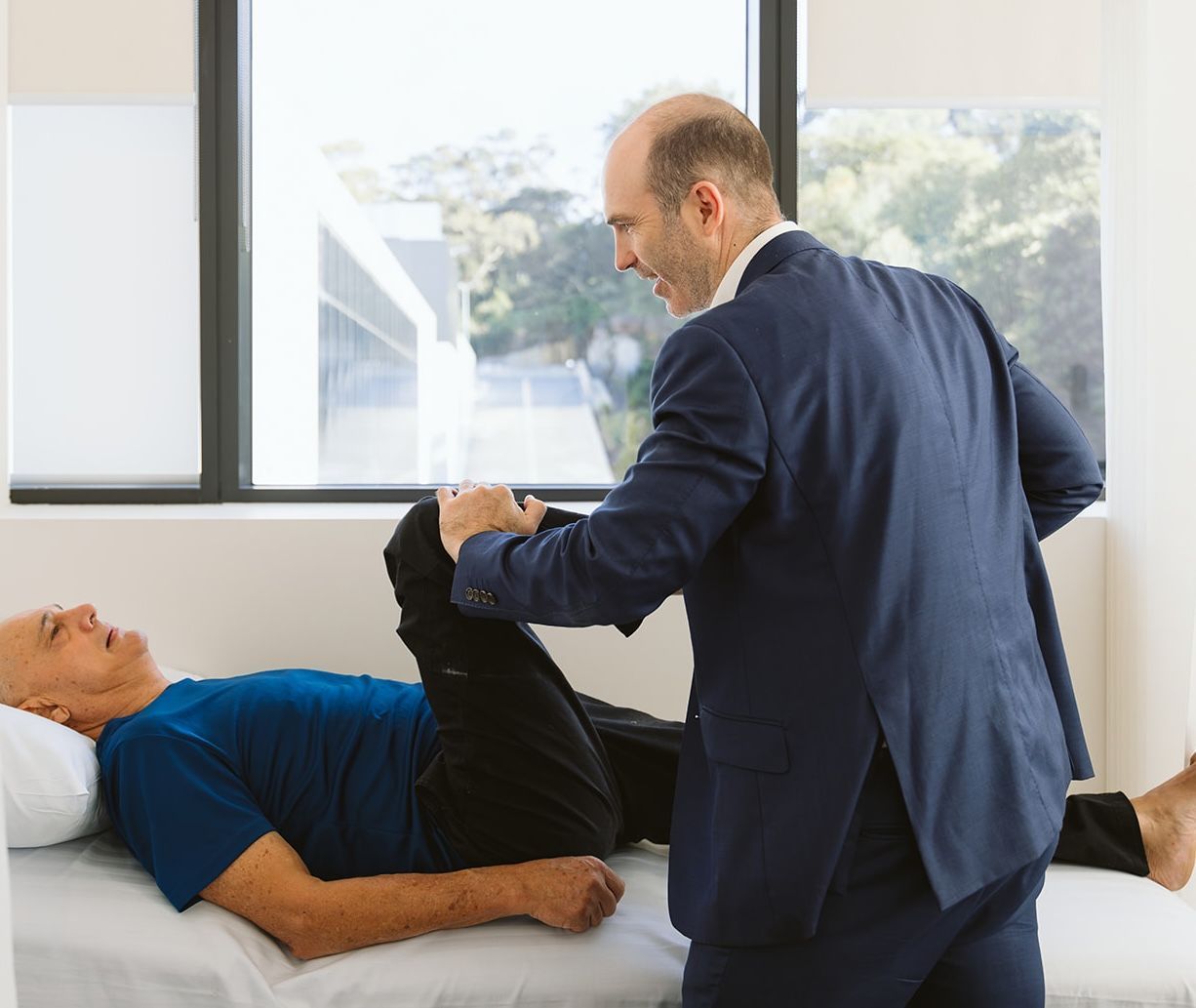
Dr Williams is dual-trained in the management of both adult and childhood hip conditions and is a consultant orthopaedic surgeon at the Children’s Hospital Westmead, where he treats mainly paediatric hip disorders.
Childhood hip conditions include a wide range of disorders that affect the developing hip joint at different stages of growth. Each condition has distinct causes, age groups, and treatment approaches. The most common conditions affecting the child’s hip include:
- Developmental Dysplasia of the Hip (DDH): A condition present at birth or early infancy where the hip socket is shallow, leading to hip dislocation in severe cases or early onset adult arthritis in milder cases.
- Perthes Disease (Legg–Calvé–Perthes Disease): A condition typically affecting children aged 4–10 years, where reduced blood supply causes the femoral head to become misshapen.
- Slipped Capital Femoral Epiphysis (SCFE): A disorder seen mainly in adolescents, where the growth plate at the top of the thigh bone weakens, and the femoral head slips out of alignment.
- Transient Synovitis: A temporary inflammatory condition of the hip joint, often following a viral illness, causing pain and limping in young children.
- Septic Arthritis of the Hip: A serious infection inside the hip joint that requires urgent medical treatment to prevent permanent damage.
- Hip Conditions Related to Neuromuscular Disorders: Children with cerebral palsy or muscle tone disorders may develop hip instability or dislocation over time.
- Traumatic Hip Injuries: Fractures or hip dislocations resulting from falls, accidents, or sports injuries are more common in older children and teenagers.
- Pelvic avulsion injuries: In teenage boys, especially, sudden contraction of the muscles around the hip while playing sports can lead to avulsion of the various tendons from different locations on the pelvis.
- Childhood hip arthritis: Can occur due to inflammatory conditions such as Juvenile Rheumatoid Arthritis, end-stage avascular necrosis, or infection.
- Skeletal dysplasias: Genetic conditions such as Multiple Epiphyseal Dysplasia or mucopolysaccharidoses can affect the developing hip and require hip replacement.
Symptoms of Childhood Hip Conditions
Symptoms of childhood hip conditions can vary widely depending on the child’s age and the specific condition. Under certain conditions, such as mild hip dysplasia, there are usually no symptoms until much later in life. In some cases, symptoms are subtle, leading to delayed diagnosis.
- Limping or altered walking: One of the most common signs, often without a clear injury.
- Hip, groin, thigh, or knee pain: Pain may be felt in areas away from the hip, particularly the knee.
- Reduced movement: Difficulty spreading the legs, stiffness, or limited hip rotation. Any asymmetry in hip movement should raise concern.
- Pain with activity: Symptoms may worsen with running, jumping, or prolonged walking.
- Reluctance to bear weight: Younger children may refuse to stand or walk.
- Leg length difference: One leg may appear shorter, particularly in longstanding conditions.
- Delayed motor milestones: In infants, delayed rolling, crawling, or walking may be noticed.
- Systemic symptoms: Fever or general unwellness may indicate infection rather than a mechanical problem.
Diagnosis of Childhood Hip Conditions
Accurate diagnosis of childhood hip conditions relies on a combination of clinical assessment, imaging, and careful monitoring over time. Early diagnosis is critical to prevent long-term complications.
- Medical history: Dr Williams will assess pregnancy history, birth details, developmental milestones, family history, and onset of symptoms.
- Physical examination: Assessment includes checking hip range of motion, leg length, walking pattern, muscle strength, and joint stability.
- Newborn hip screening: Routine hip examinations shortly after birth help detect instability or dislocation early.
- Ultrasound imaging: Commonly used in infants to assess hip development before the bones fully harden.
- X-rays: Used in older children and adolescents to assess bone alignment, growth plates, and joint shape.
- MRI scans: Helpful for evaluating blood supply to the femoral head, cartilage health, and early joint changes not visible on X-ray.
- Blood tests: May be required if infection or inflammatory conditions are suspected.
- Ongoing monitoring: Some conditions require repeated imaging over months or years to track progression and guide treatment decisions.
Treatment of Childhood Hip Conditions
Treatment depends on the child’s age, the specific condition, its severity, and the developmental stage. The goal is always to protect hip function, support normal growth, and reduce the risk of long-term damage.
Dr Williams will thoroughly discuss your child’s diagnosis and the rationale behind the recommended treatment in their case.
- Observation and monitoring: Mild or early conditions may only require regular follow-up to ensure the hip develops normally.
- Bracing or harnessing: Devices such as a Pavlik harness are commonly used in infants with hip dysplasia to guide proper joint positioning.
- Activity modification: Reducing high-impact activities can help protect the hip during healing or growth phases, in conditions such as Perthes.
- Pain management: Appropriate pain relief and anti-inflammatory measures may be used to improve comfort and mobility.
- Physiotherapy: Exercises focus on maintaining movement, improving muscle strength, and supporting healthy joint mechanics.
- Casting or immobilisation: In some cases, temporary immobilisation helps stabilise the hip during healing.
- Surgical treatment: Surgery may be required to realign the hip, correct deformity, stabilise the joint, or address severe cases not responding to conservative care.
- Long-term follow-up: Many children require monitoring until growth is complete to ensure lasting hip health.
What if Childhood Hip Conditions are Untreated?
If childhood hip conditions are left untreated or diagnosed late, they can lead to significant short-term and long-term consequences that affect quality of life.
- Persistent pain: Ongoing hip, groin, or knee pain can interfere with daily activities and sleep.
- Walking difficulties: Limping, reduced endurance, or abnormal gait patterns may worsen over time.
- Permanent joint deformity: Untreated misalignment or growth disturbances can lead to irreversible changes in hip shape.
- Leg length differences: Uneven growth can affect posture, balance, and spinal alignment.
- Early-onset osteoarthritis: Abnormal joint mechanics increase the risk of arthritis at a younger age.
- Reduced participation in sport and activity: Physical limitations can affect social development and confidence.
- Need for more complex surgery later in life: Delayed treatment may require more invasive procedures, including joint replacement in early adulthood.
- Impact on overall well-being: Chronic pain and mobility issues can affect mental health, independence, and long-term health outcomes.
While some childhood hip conditions inevitably lead to long-term changes in hip anatomy and function, Dr Williams’ goal is to minimise the impact of your child’s hip on their ability to lead a normal, healthy, active life.